Behavior-led transformation · Amsterdam
Solve meaningful problems.
Wicked problems don't yield to linear process.
We help hospitals, schools, cities and organisations redesign the spaces, systems and habits around their hardest problems — so people actually change what they do.
Fields of practice
- Healthcare
- Education
- Architecture
- Urban planning
- AI transformation
01 / The Orbit Model
Three layers. Four moves.
Each orbit tighter.
Every cycle returns to the start with sharper evidence — so the next intervention is smaller, faster and more precise.
-
A
Sense or measure
Read the system. The problem is always more than it appears.
“Where do decisions actually get made?”
-
B
Decide or randomize
Narrow to the smallest intervention with the largest effect.
“What must be true before we commit?”
-
C
Act or pause
Intervene with precision. Irreversible shifts, not just deliverables.
“What would make this the path of least resistance?”
-
D ↺
Learn or unlearn
The orbit tightens. The next cycle begins with sharper instruments.
“What actually moved, and what just looked like it did?”
02 / Selected work
Orbits in the field.
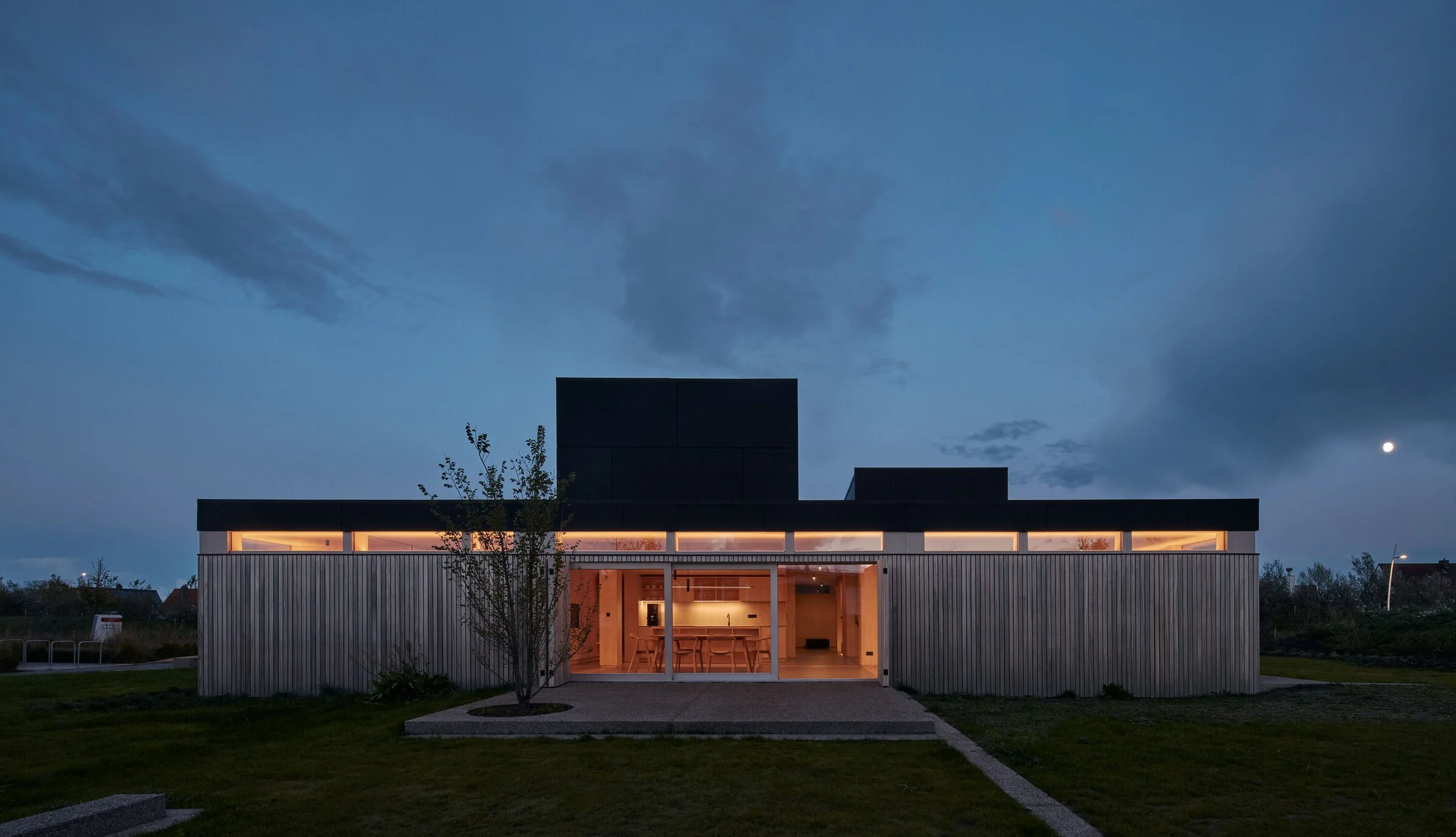
01 Warm NestNeuroarchitecture for cancer support Healthcare
- Problem
- Healthcare environments optimise for efficiency. A cancer support space had to do the opposite: lower stress, support psychological regulation, and feel like somewhere a person would choose to enter.
- Orbit
- Behavioural neuroscience translated into spatial decisions: privacy gradients, threshold design, acoustic calibration, biophilic material systems. Every room earned its story before a single module was placed.
- What shifted
- A building that changed the question, from “how do we make a healthcare facility less clinical?” to “what does a space need to understand about the nervous system before it earns the right to hold someone in crisis?”
With Ark Shelter · Archekta
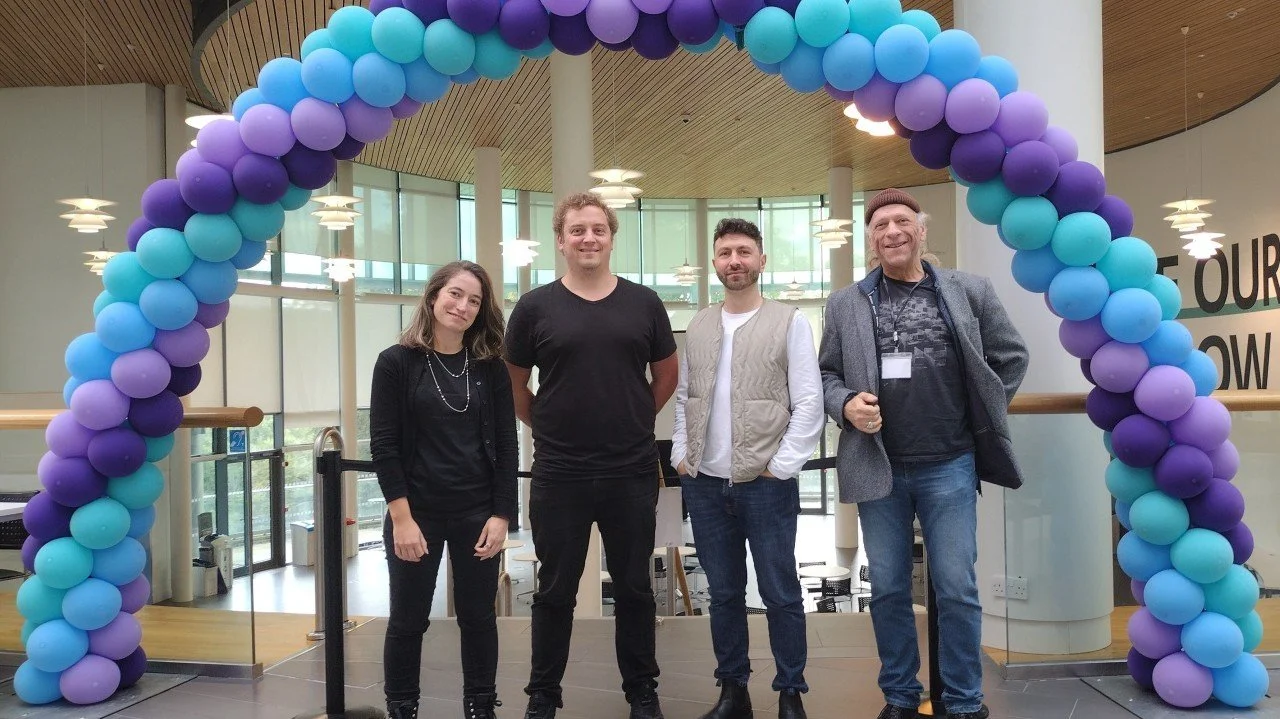
02 AE2AICurriculum redesign for AI-native cognition Education
- Problem
- Education systems are not structurally prepared for AI-native cognition. The question was not how to teach AI, but how to redesign learning so human judgment remains the thing being developed.
- Orbit
- Behavioural learning science, AI capability modelling and curriculum system design, held in tension until the contradictions between them produced something neither discipline could reach alone.
- What shifted
- The inaugural ACM Europe Seasonal School showed the field was ready for a different conversation: not tools, but cognition. Thirty participants. Sold out. The frameworks continue through the institutions that carried them forward.
With ACM Europe · University partners
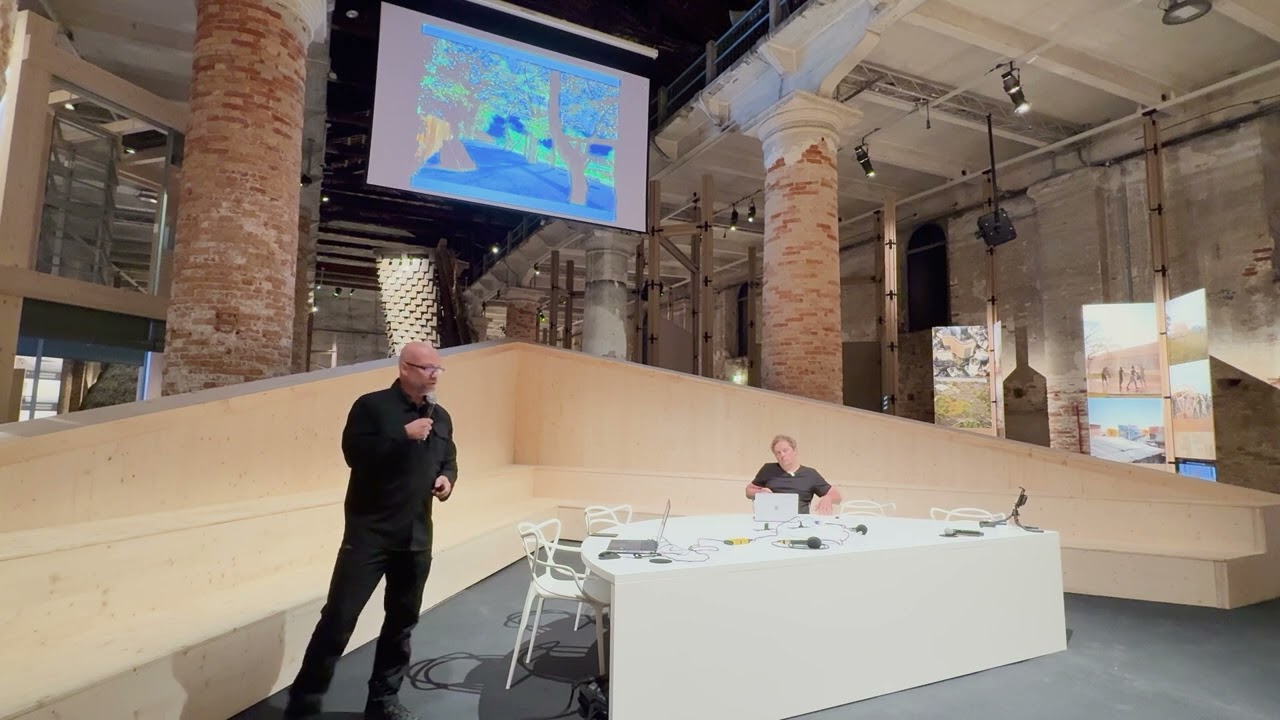
03 Skin-to-Skin ArchitectureMetabolic building systems · Venice Biennale 2025 Architecture
- Problem
- Architecture is still largely understood as object-making. The challenge was to argue, at cultural scale, that buildings are metabolic systems in relationship with bodies, soil and climate.
- Orbit
- Environmental psychology, biological systems thinking and biourbanism, woven into a position that had to hold up at the world's most consequential architecture event.
- What shifted
- Presented at the 19th International Architecture Exhibition, curated by Carlo Ratti (MIT), the work entered a discourse that shapes what gets built over the next decade.
With Marco Casagrande · Casagrande Laboratory
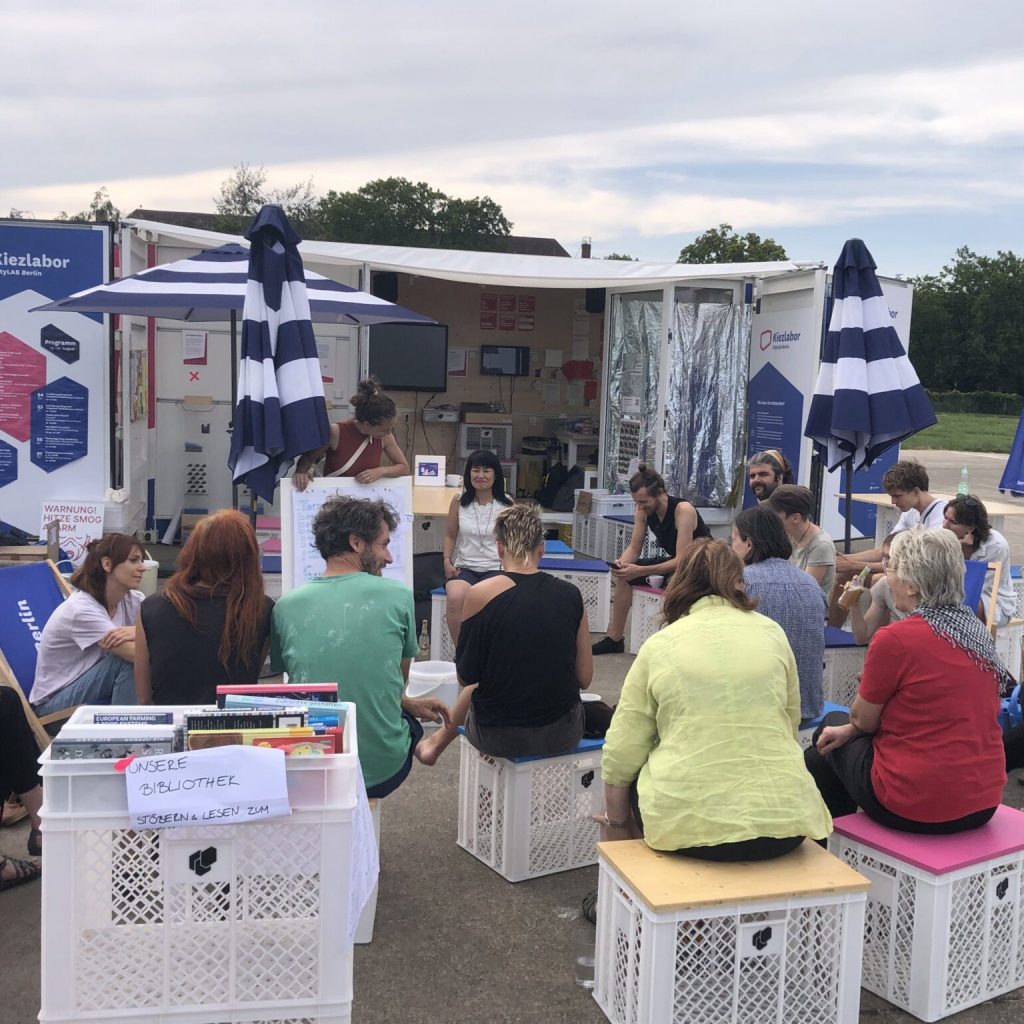
04 CoPlan AIAI scenario generation for urban planning · Ongoing Urban planning
- Problem
- Urban planning collapses complexity into static models. The question is whether AI can expand what a city is able to consider about itself, without flattening the friction that makes cities alive.
- Orbit
- Behavioural modelling, AI scenario generation and civic dialogue systems, mapping the gap between what planners know and what residents experience.
- What shifted
- An ongoing collaboration, which is itself the honest answer. Some wicked problems don't resolve into a case study; they become a long-term orbit with a partner willing to keep asking the harder question.
With Damiano Cerrone · CoPlan AI
In their words
“[A short client quote about what changed after working with BAITT — ideally one concrete result.]”
[Name] · [Role], [Organisation]
Worked with
![[Organisation 1]](/s/logo-1.png)
![[Organisation 2]](/s/logo-2.png)
![[Organisation 3]](/s/logo-3.png)
![[Organisation 4]](/s/logo-4.png)
![[Organisation 5]](/s/logo-5.png)
03 / Services
Where we come in.
01 · Diagnose
See the real problem
Map the systems, spaces and behaviors that keep it in place.
Systems Audit & Blueprint
A full diagnostic of the system as it actually functions, not as documented. We surface hidden flows, decision bottlenecks, structural misalignments and the resistance patterns that block change.
Neuro-Salutogenic Space Audit
Environments shape behaviour below conscious awareness. We audit spaces through neuroarchitecture and salutogenic design, identifying cognitive stressors and health-promoting interventions.
02 · Transform
Change what matters
Redesign how the organisation works — after a crisis, or ahead of AI.
AI-Native Transformation Program
For organisations integrating AI into complex operational and governance structures. We design the human architecture that makes AI adoption real: not just deployed, but embedded in how people work.
Post-Crisis Regeneration Strategy
For institutions emerging from failure, scandal or structural collapse. We design the conditions for genuine regeneration, not just rebranding, with durable, behaviour-anchored change.
03 · Sustain
Keep it working
Build the networks and foresight that hold change in place.
Cognitive Sanctuary Network
A curated programme of spaces, practices and peer relationships that restores cognitive capacity in high-complexity roles. For leaders and teams operating at the limit of systemic load.
Future of… Observatory
Ongoing intelligence on how a specific domain (education, healthcare, governance, urban systems) is being transformed by behavioural, structural and technological forces. Commissioned or syndicated.
04 / Principle — Human
Accountable.
Judgment, ethics and ownership stay with people — the stakes are relational, ethical and political.
Principle — AI
Accelerates.
Synthesis, simulation and testing in a fraction of the time — so judgment can work at scale.
05 / Who we are
The people in the orbit.
A neuroscientist, an urbanist and a systems strategist — three lenses on the same problem.

Menno Cramer
Neuroscientist & Designer
Menno looks at what happens between people, spaces and systems. His work combines neuroscience and design to understand how environments shape behaviour, decision-making and experience — and how better design can change what people do, not just what they see.
LinkedIn
Damiano Cerrone
Urbanist
Damiano works with cities as living systems. He studies how policy, behaviour, infrastructure and everyday life interact, and uses that understanding to rethink how places can adapt, evolve and respond to change.
LinkedIn
Carla Sofia Teixeira
Systems & Strategy
Carla makes complexity workable. She connects systems, strategy and people to uncover what is really driving a problem, where change can happen, and how ideas can move from interesting to actionable.
LinkedIn